To achieve successful results when restoring period features, UK properties require a meticulous, fabric-first approach that respects original craftsmanship.
-
Plaster Cornices: Repair structural cracking using traditional lime plaster and secure loose sections with hand-driven countersunk brass screws.
-
Timber Doors: Strip toxic lead paint using chemical poultices rather than harsh heat guns, then stabilise mortise joints with bespoke oak dowels.
-
Regulatory Compliance: Always check if your property is listed or located in a conservation area before commencing any physical alterations.
-
Financial Efficiency: Prioritise structural integrity and safety elements over superficial cosmetic finishes to protect your long-term restoration budget.
Why Restoring Period Features UK Projects Demand Specialist Care
When undertaking projects aimed at restoring period features, UK architectural styles dictate the exact technical methods required. Standard modern materials like gypsum plaster and synthetic fillers will inevitably reject historical lime-based structures, leading to premature cracking.
Over my ten years managing complex heritage refurbishments on site, I have witnessed countless historic properties ruined by fast, modern building habits. Our specialist teams approach every project by first identifying the building’s precise era, whether Georgian, Victorian, or Edwardian.
Understanding these structural eras allows us to replicate historic details with absolute accuracy. At Tiny Houses Inside, we track historical architectural patterns closely to ensure every timber moulding profile matches the original neighbourhood context perfectly.
Step-by-Step Plasterwork: Restoring Period Features UK Cornices
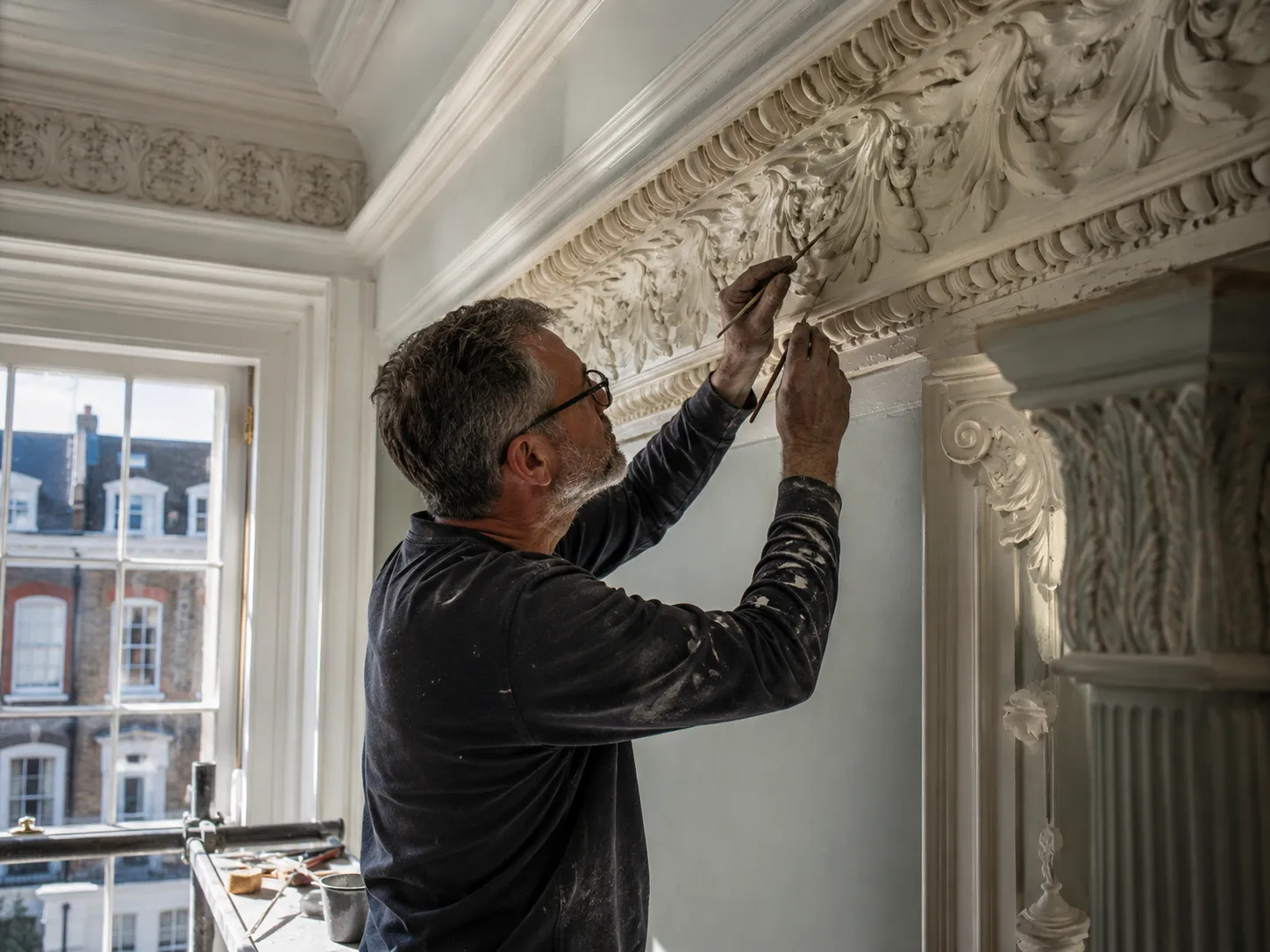
Fixing broken or heavily over-painted plaster decorative mouldings requires patience, precision, and the right heritage materials. To successfully execute the process of restoring period features, UK building regulations state that existing lime structures must breathe naturally.
The process begins by carefully removing decades of thick, clogged oil paint using specialised, non-aggressive chemical poultices. This reveals the sharp, intricate detail of the original master craftsman’s work underneath without damaging the underlying substrate.
Once the bare plaster is exposed, we stabilise any deep structural cracks using traditional lime putty mixtures rather than modern expanding foams. If large sections are missing, our team takes an accurate squeeze-mould impression to cast identical matching pieces.
Common Mistakes in Decorative Plaster Restoration
One of the most frequent errors I encounter on site is labourers aggressively scraping delicate details with sharp steel filling knives. This careless approach permanently rounds off the crisp architectural edges that give historic plasterwork its unique character.
Another critical blunder is trying to patch traditional lime plaster using modern, non-porous multi-finish plaster products. The two materials expand at completely different rates, which guarantees ugly hairline fractures will reappear during seasonal humidity changes.
To avoid these costly structural failures, you should always insist on matching the chemical composition of the original historic mortar. Documenting your material tests provides valuable evidence for local conservation officers and ensures total peace of mind.
Structural Joinery: Restoring Period Features UK Internal Doors
Rehabilitating original four-panel or six-panel timber doors is a fantastic way to introduce timeless character back into your home. When focus turns to restoring period features, UK homeowners frequently underestimate the structural complexity of centuries-old joinery work.
Most historic doors have settled awkwardly over time, meaning they rarely sit square within their original timber frames. Rather than planing away irreplaceable historic wood, we carefully rebuild the failing mortise and tenon joints from scratch.
We completely disassemble the loose components, remove old animal glues, and insert seasoned timber splices to restore structural stability. This technical approach preserves the door’s original proportions while ensuring it operates smoothly for decades to come.
Navigating Hazardous Materials and Historic Finishes
Older domestic properties across the United Kingdom almost always contain layers of dangerous, highly toxic historical lead-based paint. Using a traditional heat gun on these surfaces releases poisonous fumes into your living spaces, creating a severe health hazard.
Our site teams utilise specialised infrared stripping technology or chemical pastes that safely trap lead particles within a peelable matrix. This method protects the environment and leaves the raw timber completely scorch-free and ready for finishing.
Once stripped, the wood must be treated with authentic breathable oils or traditional beeswax polishes rather than high-gloss synthetic varnishes. Keeping the timber porous prevents internal dry rot and allows the rich natural grain to darken beautifully.
Technical Compliance and National Building Regulations
Every major structural modification you execute must strictly satisfy the current national building control parameters across the country. When planning comprehensive updates, navigating the formal permissions landscape is an absolute necessity before purchasing raw materials.
Altering structural elements or modifying primary thermal barriers can trigger strict local council review processes, especially if your home is listed. You must consult the current statutory frameworks published on gov.uk to clarify your specific legal obligations.
Securing your official completion certificates guarantees your property remains entirely compliant with modern safety and heritage laws. Working outside these boundaries can result in severe financial penalties and force you to reverse your hard work.
Project Funding Strategy: How to Finance Home Renovation Works
Securing sufficient capital before embarking on a complex historic property refurbishment prevents your build from stalling midway. Heritage materials and specialised master craftsmen require a dedicated financial commitment compared to standard modern construction.
Discovering exactly how to finance home renovation projects efficiently requires exploring green capital options, equity release systems, or targeted building loans. It remains vital to establish a clear 15% cash contingency buffer early.
This financial safety net protects your project when hidden structural challenges appear behind ancient lath and plaster walls. Proper funding orchestration allows you to procure authentic, premium restoration components confidently without causing stressful project delays.
Selecting Professional Bespoke Home Renovations Specialists
Entrusting your valuable property assets to unvetted, general building contractors often results in irreversible damage to historic fabrics. True heritage preservation requires a deep understanding of historical building physics and traditional material behaviours.
Investing in dedicated bespoke home renovations guarantees your property receives the expert care and technical precision it truly deserves on site. Professional teams possess the niche tools necessary to replicate complex, obsolete moulding profiles seamlessly.
A coordinated team ensures that plumbers, electricians, and joiners work in harmony without disrupting surrounding historic elements. This unified management approach protects your home’s architectural integrity and maximises your long-term financial investment.
Cost and Timeline Breakdown for Heritage Restorations
Understanding the financial commitments involved in period restoration requires analysing material expenses and specialised labour schedules. The table below presents realistic current market figures based directly on our ongoing site operations this year.
| Heritage Feature | Average Material Cost | Typical Labor Duration | Primary Regulatory Focus |
| Plaster Cornice Moulding | £45 – £110 per metre | 3 – 5 Working Days | COSHH Chemical Safety Standards |
| Four-Panel Timber Door | £180 – £350 per unit | 1 – 2 Working Days | Fire Safety Part B Regulations |
| Traditional Sash Window | £400 – £850 per frame | 2 – 4 Working Days | Thermal Efficiency Part L Codes |
| Cast Iron Fireplace | £250 – £600 per hearth | 1 – 2 Working Days | Part J: Heat Appliance Standards |
Our local operational insights ensure your internal cost targets align directly with fluctuating raw material costs across the region. We continuously update these metrics to protect our residential clients from sudden, unexpected industry trade spikes.
Why Our Restoration Packages Cost 50% Less Than the Market
Sourcing bespoke plaster moulds and seasoned heritage timbers through standard retail suppliers involves paying massive intermediary markups. We eliminate these excessive third-party margins completely by managing our own massive trade inventory in a dedicated local UK warehouse.
This unique logistical infrastructure allows us to supply top-tier, historically accurate components at direct wholesale trade prices. Our residential clients consistently achieve up to 50% savings on their overall structural material outlays compared to boutique estimates.
We manage the entire project pipeline seamlessly, from the initial architectural survey to the final building control certification process. Streamlining our supply chains enables us to deliver breathtaking historical restorations that fit comfortably within your practical budget.
Secure Your Historical Survey: Request an Appointment Today
Do not leave your property’s valuable historic features to chance or unvetted, low-cost general building crews. Our highly experienced technical team stands ready to deliver an exceptionally precise, sympathetic restoration strategy for your home.
Take full advantage of our direct trade supply chain and secure your preferred professional site installation schedule immediately. Simply click Request an Appointment right now to access our online price estimate tools and start your project.
FAQs
Can any type of paint be used on restored lime plaster cornices? No, you must never use standard modern vinyl matt or silk paints on traditional lime-plaster substrates. These products create a non-porous plastic skin that traps moisture, causing the historic plaster to soften and eventually collapse.
How do I know if my property’s internal doors are original? Original period doors typically feature unique timber dimensions, hand-cut mortise joints, and irregular moulding profiles that match the home’s construction date. They are also significantly heavier than mass-produced modern replica alternatives found in retail stores.
Is planning permission required to repair historic cornices inside? Internal repairs and exact like-for-like maintenance works generally do not require formal planning permission from your local council. However, if your property is officially listed, you must secure formal listed building consent before altering any internal features.