The most effective extractor fan open-plan kitchen setup requires a motor capable of achieving at least 10 complete air changes per hour.
-
Extraction Rate: Minimum requirement of 600m³/hr to 800m³/hr for large, unpartitioned domestic spaces.
-
Noise Levels: Select units generating less than 60 decibels (dB) to avoid drowning out conversation or television audio.
-
Ducting Efficiency: Utilise rigid 150 mm rigid ducting rather than flexible hoses to maintain maximum airflow velocity.
-
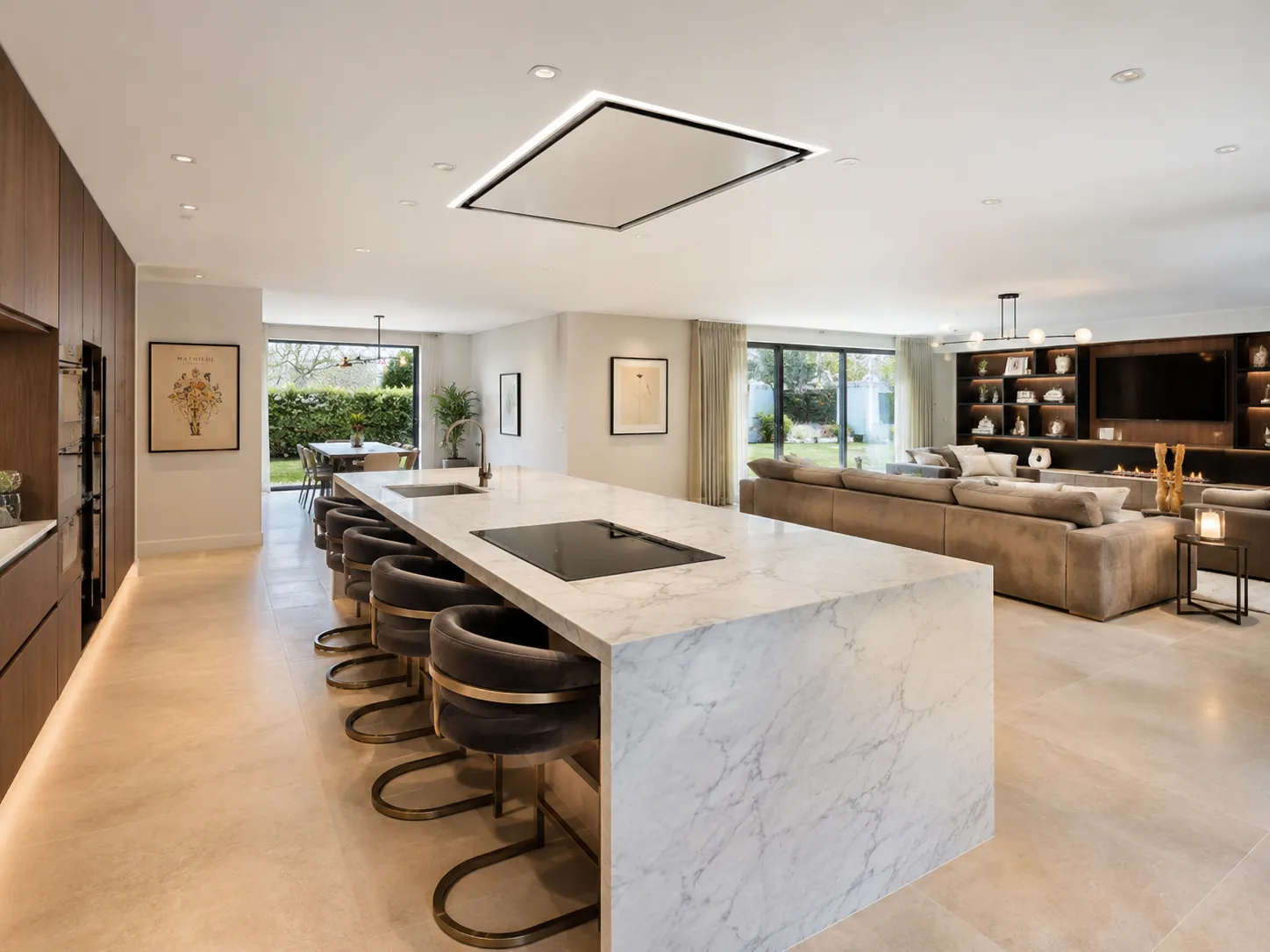
Installation Style: Ceiling-recessed cassettes and downdraft extractors are preferred for unobstructed visual sightlines.
Calculating Extraction Rates for an Extractor Fan Open-Plan Kitchen
Finding the correct extraction rate involves multiplying your room’s volume (length x width x height) by ten to ensure rapid odour removal. If you specify an underpowered unit for an open-plan layout, cooking smells will rapidly migrate into your soft living room furnishings.
During my extensive decade managing complex residential builds, I have constantly witnessed homeowners severely underestimate these necessary volumetric calculations. Properly calibrating your required airflow is the most critical technical step before authorising any structural ceiling modifications.
Selecting the Right Ducting for an Extractor Fan Open-Plan Kitchen
The physical diameter and internal texture of your extraction ducting absolutely dictate how efficiently your new appliance performs under heavy load. We exclusively specify smooth, rigid 150mm plastic ducting because it drastically reduces air friction and minimises operational turbulence.
A common catastrophic mistake is using ribbed, flexible aluminium hoses squeezed tightly through narrow floor joists during the installation phase. This poor routing strategy creates massive air resistance, causing the motor to whine loudly whilst failing to extract steam properly.
Acoustic Control in an Extractor Fan Open-Plan Kitchen
Managing operational noise is paramount when your primary culinary zone seamlessly merges with your main living and dining spaces. If your extraction unit operates above 65 decibels, it will completely dominate the room, forcing you to shout over the motor.
Integrating a premium downdraft system into a carefully planned Kitchen Renovation ensures powerful extraction right at the cooking surface. These intelligent units pull heavy steam downwards immediately, preventing noisy vapour from travelling upwards into a remote ceiling cassette.
Positioning Considerations for an Extractor Fan Open-Plan Kitchen
The physical placement of your extraction unit relative to cross-breezes significantly impacts its ability to capture rising steam plumes. Placing a hob directly opposite an exterior door often creates lateral draughts that blow cooking grease straight past the extraction canopy.
If you are carefully calculating your central kitchen island clearance size, you must perfectly align the ceiling extractor directly above the hob. Misaligning the canopy by even a few centimetres drastically reduces its capture efficiency, leaving lingering odours across your ground floor.
Compliance and Regulations for an Extractor Fan Open-Plan Kitchen
Every mechanical ventilation upgrade in a modern British property must strictly satisfy current building codes to maintain legal structural safety. You must ensure your newly fitted extraction equipment meets the statutory minimum extraction rates mandated for domestic unpartitioned areas.
Before cutting into any external masonry to install new extraction vents, you should verify the latest compliance guidelines published on gov.uk. Adhering to these strict building control parameters guarantees your installation is lawful, safeguarding your property’s future resale valuation.
Integrating Ventilation with Bespoke Storage Layouts
Balancing aggressive mechanical ventilation with your desired aesthetic requires incredibly precise spatial coordination between your cabinet makers and electricians. Concealing bulky extraction motors within overhead joinery demands accurate templating to ensure the unit does not rattle against the timber framing.
When debating whether a larder vs pantry suits your home better, remember that mechanical extraction routing heavily dictates available ceiling voids. A perfectly integrated extraction system completely vanishes into the surrounding architecture, leaving your meticulously designed storage spaces visually uninterrupted.
Avoiding Failures in Extractor Fan Open-Plan Kitchen Setups
The most expensive error property owners make is attempting to utilise a recirculating carbon filter hood in a massive, unpartitioned space. Carbon filters simply cannot process the heavy volume of moisture generated by boiling pasta, leading to severe condensation issues rapidly.
At Tiny Houses Inside, our technical teams consistently advocate for direct external venting whenever the architectural layout permits it. Venting exhaust gases directly to the outside permanently removes the moisture threat, preventing destructive dampness from settling on your premium finishes.
Protecting Your Flooring During Ventilation Upgrades
Core-drilling large extraction holes through exterior brickwork generates massive amounts of abrasive masonry dust and sharp rubble. Failing to adequately shield your surrounding surfaces during this aggressive structural work will inevitably result in severe, permanent scratches.
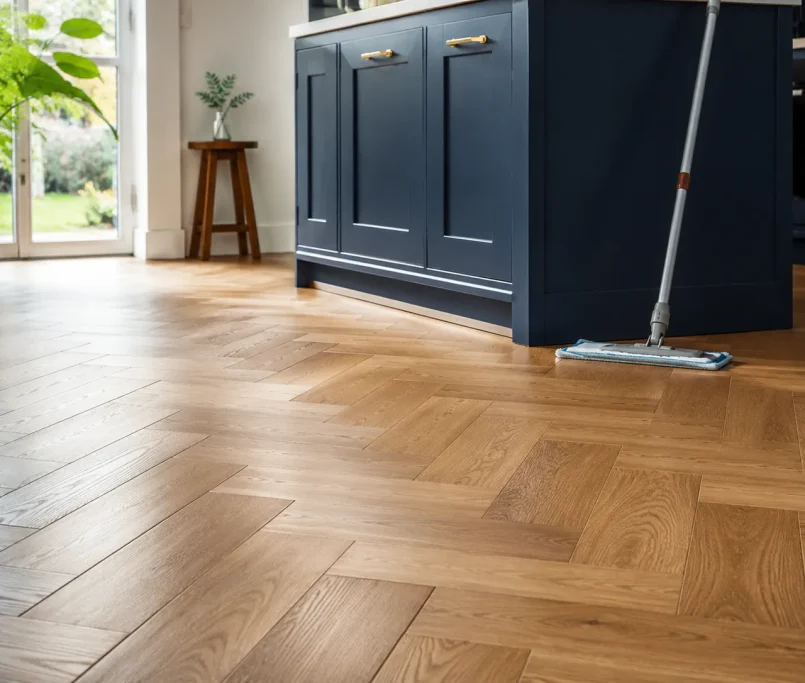
Executing flawless herringbone kitchen floor care involves putting down heavy-duty protective correx boards before any ceiling modifications begin. Protecting your elegant timber parquetry from falling debris is a mandatory step in our rigorous residential site management protocols.
Comparing Models for an Extractor Fan Open-Plan Kitchen
Analysing the mechanical performance metrics of different extraction architectures helps you allocate your renovation budget intelligently and effectively. You must weigh the visual impact of the unit against its volumetric pulling power to find the perfect operational balance.
The comparison matrix below details the core differences between popular extraction styles currently dominating the British property market. These real-world figures will assist you in selecting the exact technical specification required for your specific domestic environment.
| Extractor Style | Ideal Application | Average Extraction Rate | Noise Level |
| Ceiling Flush Cassette | Large central islands | 800m³/hr – 1000m³/hr | Moderate (55-65 dB) |
| Integrated Downdraft | Minimalist visual layouts | 600m³/hr – 800m³/hr | Low (45-55 dB) |
| Chimney Statement Hood | Traditional wall placement | 500m³/hr – 750m³/hr | Moderate (50-60 dB) |
| Recirculating Pendant | Areas lacking external walls | 400m³/hr – 600m³/hr | High (60-70 dB) |
Direct Wholesale Pricing for Your Property Upgrade
Paying inflated high street retail markups for premium mechanical ventilation simply drains your available budget for no logical reason. We completely eliminate these excessive intermediary showroom margins by holding a massive trade inventory within our dedicated UK warehouse.
When you secure comprehensive bespoke home renovations through our direct-to-consumer model, you access contractor-grade hardware instantly. This intelligent logistical approach provides you with breathtaking British craftsmanship and superior technical appliances at highly competitive, direct wholesale pricing.
Finalising Your Extractor Fan Open-Plan Kitchen Specification
Stop compromising on poor indoor air quality and let our seasoned architectural specialists engineer the perfect ventilation strategy. We provide completely transparent, itemised estimates to ensure your stunning new layout performs flawlessly without any hidden financial surprises.
Take immediate advantage of our exclusive direct-warehouse trade pricing and secure your preferred professional site installation date today. Simply click Request an Appointment right now to access our online booking tool and begin your spectacular property transformation.