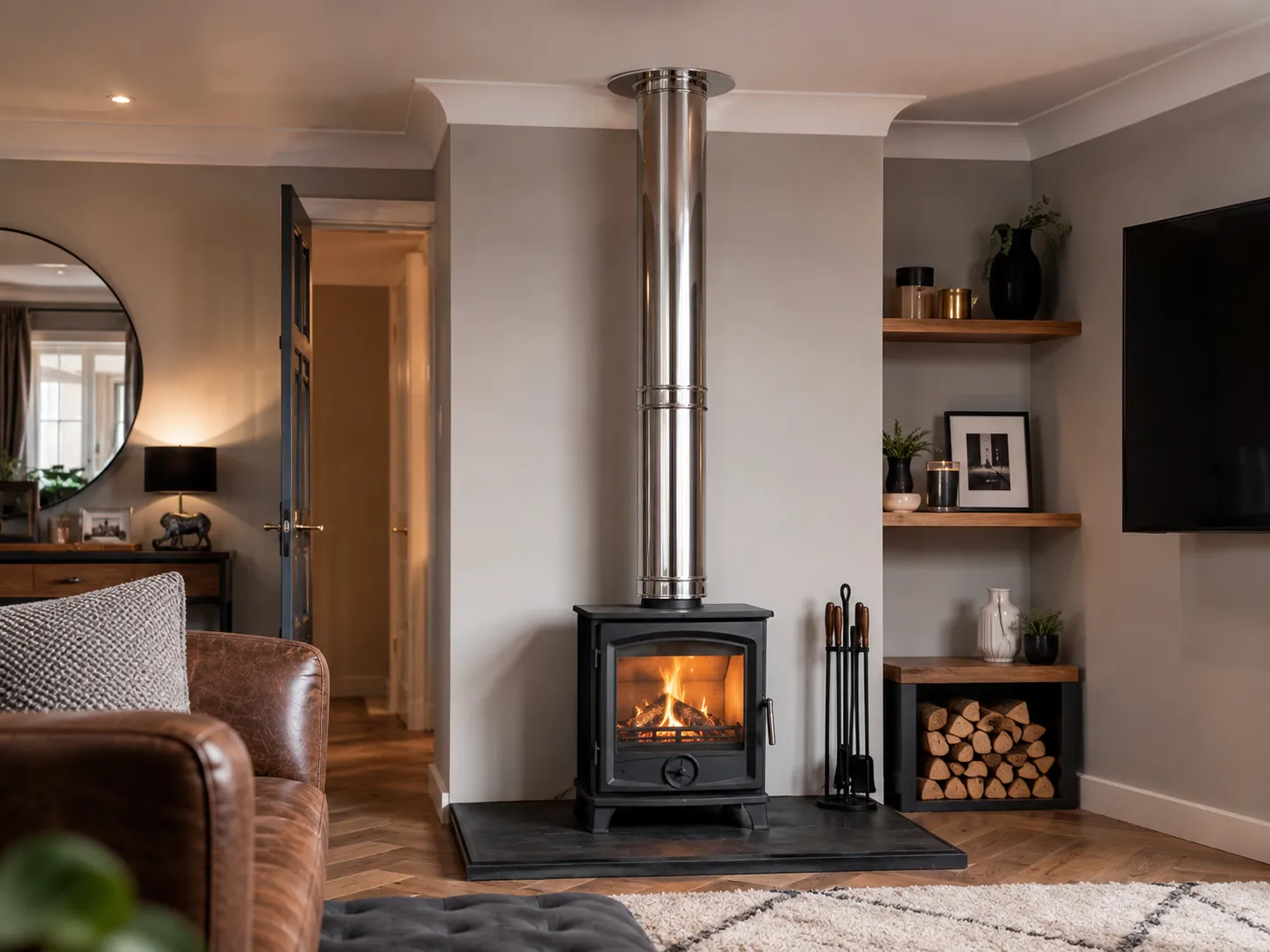
Yes, you can absolutely install a log burner without chimney access by utilising a prefabricated twin-wall insulated flue system. This creates a highly safe, artificial chimney that routes exhaust gases directly through your roof or external walls.
- The Technology: Twin-wall flues consist of stainless steel pipes wrapped in dense insulation, preventing external surfaces from transferring dangerous heat to your property.
- Routing Options: You can route the rigid flue internally through the ceiling joints or externally up the side of your masonry brickwork.
- Legal Compliance: All installations must strictly adhere to Document J building regulations and require official HETAS certification upon completion.
Technical Feasibility: Fitting a Log Burner Without Chimney
How exactly does a modern property safely extract solid fuel smoke without traditional brickwork? Achieving a flawless log burner without chimney requires meticulous structural planning to deploy an insulated twin-wall steel system that safely pierces your property’s envelope.
Over my seven years executing complex heating upgrades across the UK, I have completely transformed countless modern properties lacking traditional brick stacks. At Tiny Houses inside, our technical teams consistently prove that lacking an old Victorian fireplace is never a dealbreaker for homeowners.
We deploy highly advanced twin-wall systems that deliver superior smoke extraction compared to many damp, unlined historical brick chimneys. Designing your layout early ensures your new focal point sits perfectly within the room while maintaining absolute structural safety.
How Twin-Wall Flue Systems Actually Work
What stops the immense heat of the exhaust gases from setting your ceiling joists on fire? A twin-wall system utilises two layers of premium 316-grade stainless steel, packed tightly with high-density rockwool insulation between them.
This thick insulation barrier ensures the internal exhaust gases stay incredibly hot, which is vital for maintaining a strong, upward chimney draught. Simultaneously, the outer steel skin remains cool enough to safely pass through timber floors and plasterboard walls without igniting them.
Overcoming Structural Routing Challenges on Site
Where is the safest and most efficient path to route the steel pipework out of your building? When configuring a log burner without a chimney, you must decide whether to run the insulated pipes vertically through internal ceilings or horizontally out to the exterior wall.
An internal route keeps the entire flue incredibly warm, maximising the stove’s operational efficiency and boosting the thermal output significantly. However, internal routing requires cutting through your upstairs floor joists and creating a weatherproof seal where the pipe exits your roof tiles.
Many clients prefer the external route, where the flue immediately breaches the living room wall and runs up the exterior brickwork. This approach minimises indoor mess, ensuring your decorative plasterwork and upstairs carpets remain completely untouched during the build.
External vs Internal Flue Extraction Paths
Why do external metal flues sometimes cause lighting issues during freezing winter mornings? External flues cool down much faster than internal ones, creating a heavy plug of freezing air inside the pipe that pushes smoke back into the room upon ignition.
External routing causes significantly less disruption to your upstairs bedrooms during the physical installation process. When evaluating Home Renovation Services, external flues are usually faster to fit, keeping immediate labour costs down.
Once you learn exactly how to use woodburner controls properly, managing this initial temperature difference becomes a seamless part of your daily routine. Priming the cold flue with a small newspaper torch easily reverses the draught, establishing a clean, smokeless burn.
Common Customer Mistakes When Installing a Log Burner Without Chimney
What is the most dangerous error homeowners make when trying to reduce their flue material costs? The most terrifying blunder I witness on residential sites is DIYers attempting to use single-wall stove pipes for the entire vertical run through a ceiling.
Single-wall pipes radiate immense heat and will instantly cause a catastrophic house fire if they touch any timber joists. Single-wall vitreous enamel pipes are only legally permitted for the very first section directly above the stove itself within the same room.
You must transition to a heavily insulated twin-wall system at least 425 mm before the pipe passes through any combustible structure. Cutting corners on these highly engineered steel components risks your family’s safety and completely invalidates your home insurance policy.
Ignoring Hearth Clearances and Combustible Materials
How thick must a protective floor plate be when placing a stove directly onto wooden floorboards? If your stove operates with a base temperature exceeding 100°C, you must lay a structural concrete or stone hearth at least 250mm thick.
Failing to calculate the mandatory non-combustible hearth dimensions required for a log burner without chimney is a massive, expensive oversight. The hearth must extend at least 225mm in front of the stove doors to catch any falling red-hot embers safely.
Furthermore, placing plasterboard or timber stud walls too close to the rear of the appliance violates strict fire safety parameters. You must adhere to the manufacturer’s specified distance to combustibles, which often dictates how far the stove must project into your room.
UK Building Regulations and Statutory Compliance
Do you need local council permission to erect a metal chimney on the outside of your house? Modifying a property to accommodate a new log burner without chimney requires professional qualification and registration under Document J building regulations.
Every solid fuel heating alteration must strictly satisfy current national building codes to maintain legal safety and structural compliance. Before cutting into external masonry walls to install structural brackets, cross-reference your plans against the official guidelines published on gov.uk.
Securing your official building completion certificates guarantees your home remains entirely legal, protecting its future resale value perfectly. If you live in a conservation area or a listed building, you must also secure formal planning permission before altering the exterior elevations.
Securing HETAS Certification for Your Log Burner Without Chimney
Who is legally authorised to sign off the installation of a new solid fuel heating appliance? We only utilise registered HETAS engineers to execute the final commissioning and smoke draw tests on your brand-new heating unit.
Our experienced site managers oversee every single regulatory inspection checkpoint, ensuring your technical setup passes council criteria seamlessly. This meticulous attention to legal detail protects you from facing retroactive enforcement fines or mandatory demolition orders later.
A valid HETAS certificate is the ultimate proof that your bespoke installation is structurally flawless and completely safe to operate. It is a mandatory document that property solicitors will demand if you ever decide to sell your home in the future.
Cost Analysis for Twin-Wall Flue Installations
How much should you realistically budget for a complete twin-wall steel system and a premium stove? A high-quality log burner without a chimney typically costs slightly more upfront because twin-wall steel components are highly engineered precision materials.
Understanding the realistic financial split across different installation materials prevents you from experiencing severe budget shock during your property build. The comparison matrix below details the current market averages compiled from our active residential heating projects across the country this year.
| Heating Component | Average UK Material Cost | Installation Complexity | Typical Lifespan |
| Ecodesign 5kW Stove | £700 – £1,500 | Moderate | 15 – 20 Years |
| Twin-Wall Flue System (Internal) | £1,200 – £1,800 | Very High (Floor penetrations) | 20+ Years |
| Twin-Wall Flue System (External) | £900 – £1,500 | High (Masonry core drilling) | 20+ Years |
| Structural Stone Hearth | £150 – £450 | Low | 50+ Years |
Why Our Bespoke Installations Cost 50% Less
Why should you avoid purchasing your solid fuel heating appliances from high street boutique showrooms? Traditional retail units add massive intermediary markups to cover their excessive commercial overheads, which drastically inflates your final itemised bill.
We eliminate these excessive third-party margins completely by keeping a massive trade inventory inside our dedicated local UK warehouse. Executing your custom fireplace installation through our direct-to-consumer model grants you access to premium wholesale trade rates immediately.
We pass these substantial procurement savings straight to your project balance sheet, minimising your overall financial outlays significantly. You receive exceptional, heavy-duty British heating components for up to 50% less than standard boutique retail estimates.
Securing Your Custom Fireplace Installation Today
Stop tolerating a cold, uninviting living room and let our seasoned heating specialists map out your flawless solid fuel upgrade today. We provide completely transparent, itemised estimates to guarantee your stunning new focal point is delivered without hidden financial surprises.
Take absolute advantage of our exclusive direct-warehouse trade pricing and secure your preferred professional fitting date before winter arrives. Simply click Request an Appointment right now to access our online booking tool and begin your spectacular property transformation.