
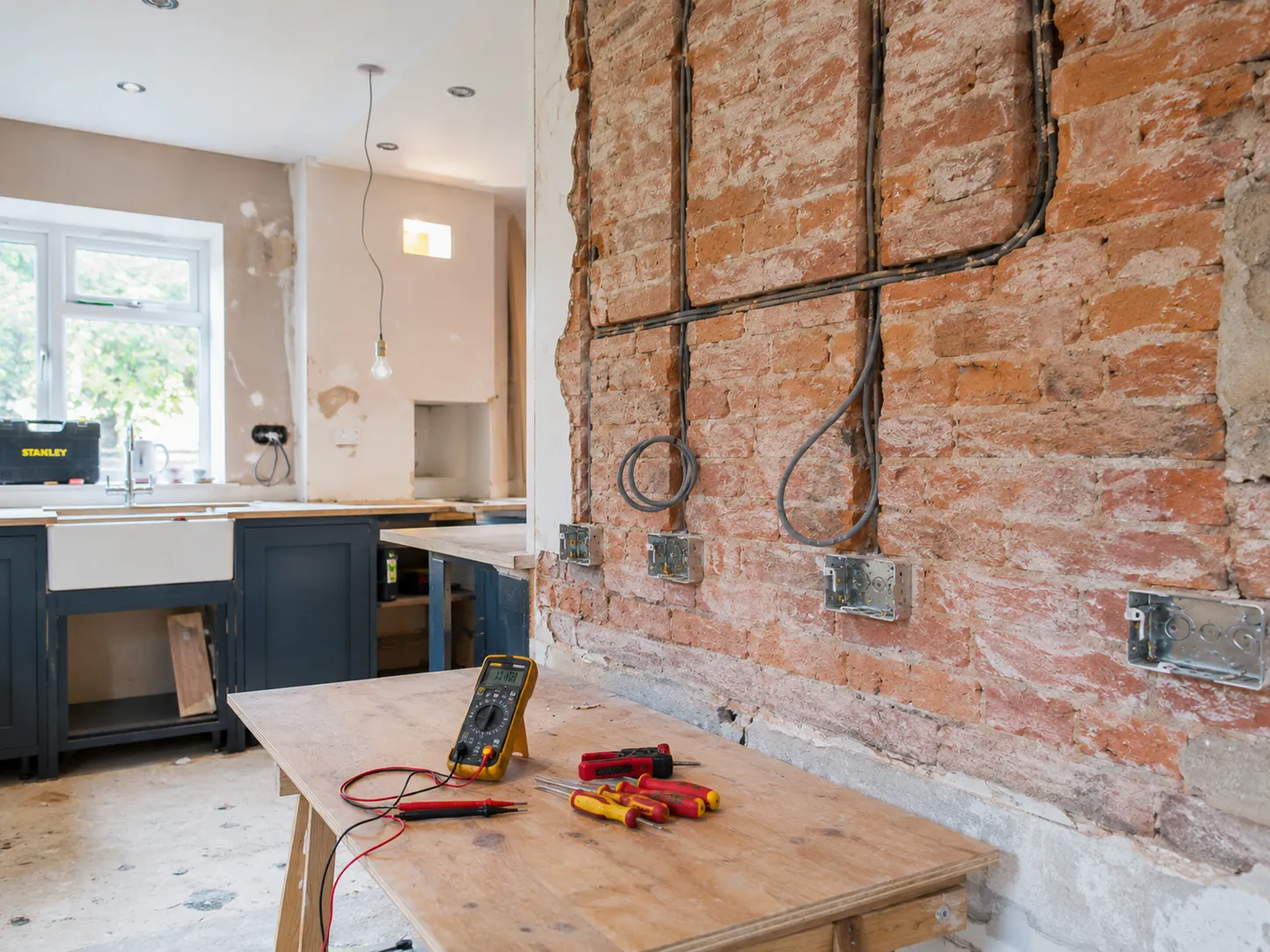
When evaluating rewiring kitchen rules in the UK, a complete electrical overhaul is mandatory if your wiring is over 25 years old or lacks RCD protection.
-
Appliance Load: Modern induction hobs and double ovens require dedicated high-amp radial circuits.
-
Safety Standards: All alterations must strictly comply with Part P of the current building regulations.
-
Certification: A minor works or full installation certificate must be issued by a registered, competent person.
-
First Fix Timing: Chasing new cables into masonry must happen before any plastering or cabinetry installation begins.
Understanding Rewiring Kitchen Rules UK
Navigating complex electrical parameters is the most critical safety phase of any modern property refurbishment. If your current consumer unit still relies on outdated wire fuses, an immediate upgrade is an absolute structural necessity before adding new culinary appliances.
Over my decade managing complex site installations across the country, I have seen numerous projects halted by dangerous hidden wiring. Adhering strictly to rewiring kitchen rules in the UK ensures your home can safely handle the immense power draw of contemporary domestic cooking equipment.
When Partial Updates Fail the Safety Test
Eager homeowners often attempt to splice new plug sockets directly into an existing, ageing ring main to save capital. This incredibly dangerous approach frequently overloads the circuit, causing regular power trips and creating a massive hidden fire hazard behind your modern cabinets.
During a comprehensive Kitchen Renovation, our certified electricians always conduct rigorous continuity tests before signing off any minor works. If the existing copper cables show severe degradation or lack proper earth sheathing, a total rewire is the only lawful and safe solution.
The Core Triggers for a Complete Electrical Overhaul
Upgrading to heavy-duty culinary appliances fundamentally changes the baseline electrical load required by your primary cooking space. A modern double oven paired with a boiling water tap will instantly overwhelm a standard household ring main, blowing the trip switches constantly.
To satisfy current rewiring kitchen rules in the UK, high-load appliances demand their own dedicated radial circuits wired straight back to the consumer unit. This bespoke engineering guarantees that your heavy heating elements receive stable, uninterrupted power without compromising your living room lighting circuits.
Integrating High-Power Induction Hobs Safely
Swapping an old gas cooker for a sleek, highly efficient induction hob requires routing a new 10mm twin and earth cable. These magnetic cooking surfaces pull immense current, requiring a heavy-duty isolation switch positioned visibly above the primary worktop area for rapid emergency shut-offs.
If you are meticulously calculating your central kitchen island clearance size, you must route these thick electrical cables through the floor joists early. Failing to bury the conduits beneath the subfloor before levelling compounds are poured results in an absolute logistical disaster on site.
Common Customer Electrical Mistakes on Site
The most expensive blunder I regularly rectify is clients leaving their lighting and socket planning until after the walls are completely plastered. Relocating a poorly positioned plug socket later means aggressively chiselling out the fresh walls, forcing you to pay the plasterers twice.
Reviewing the correct kitchen renovation step by step sequence proves that all electrical first-fix chasing must happen during the raw demolition phase. Locking in your appliance locations early prevents these frustrating timeline delays and protects your carefully managed renovation budget from spiralling.
Ignoring the First Fix Sequencing
Another catastrophic oversight is allowing tillers to seal the walls before the electrician has conducted their mandatory first fix pressure tests. If a hidden cable is accidentally pierced by a plasterboard screw, locating the fault behind fresh tiles is an incredibly destructive process.
Our site managers strictly enforce trade sequencing, ensuring the electrical infrastructure is fully verified before any cosmetic finishes are applied. This rigorous project discipline keeps your site safe and guarantees your newly installed extraction fans operate flawlessly from day one.
National Compliance and Building Regulations
Every single alteration involving electrical circuits within a domestic wet zone falls under strict statutory oversight to guarantee absolute family safety. Executing these complex installations illegally without professional certification instantly invalidates your comprehensive home insurance policy and devalues the property.
Before commencing any invasive masonry chasing, you must verify the latest Part P electrical safety parameters published directly on gov.uk. Securing your official building completion certificates proves that your rewiring kitchen rules UK compliance is flawless and entirely lawful.
Budgeting for Electrical Upgrades and Fit-Outs
Understanding the financial split between cosmetic cabinetry and hidden technical infrastructure prevents severe budget shock during the initial build weeks. A full electrical upgrade consumes a significant portion of your capital, but it acts as the vital beating heart of your newly formatted culinary space.
The comparison matrix below details the current market averages compiled from our active regional residential projects this year. These realistic figures help you anticipate exactly when your capital will be required to cover certified electrical labour and premium raw materials.
| Electrical Component | Installation Complexity | Statutory Requirement | Average UK Cost |
| Consumer Unit Upgrade | Very High (Requires main power isolation) | Mandatory for old fuse boxes | £450 – £800 |
| Full Room Rewire | High (Extensive wall chasing needed) | Mandatory if wiring is 25+ years old | £1,000 – £2,500 |
| Dedicated Induction Circuit | Moderate (Cable routing from board) | Mandatory for hobs over 3kW | £250 – £450 |
| Socket/Lighting Relocation | Low to Moderate | Discretionary based on new layout | £150 – £350 |
Accessing Direct Wholesale Materials for Home Renovations
Paying inflated retail markups to high street boutique showrooms is an unnecessary drain on your hard-earned property upgrade capital. We completely bypass these expensive third-party vendors by holding a massive trade inventory within our dedicated local UK warehouse infrastructure.
When executing comprehensive home renovations, this direct-to-consumer model allows us to supply contractor-grade cables, sockets, and LED lighting at wholesale rates. We pass these profound procurement advantages directly to your project balance sheet, cutting your overall material expenses by up to half.
Securing Your Design Consultation Today
Stop guessing about complex electrical load calculations and let our seasoned technical experts map out your flawless, perfectly safe culinary environment. At Tiny Houses Inside, we provide totally transparent, itemised estimates to ensure your gorgeous new property layout is delivered perfectly.
Take absolute advantage of our exclusive direct-warehouse trade pricing and secure your preferred professional fitting date before our calendar fills. Simply click Request an Appointment right now to access our online booking tool and begin your spectacular property transformation seamlessly.