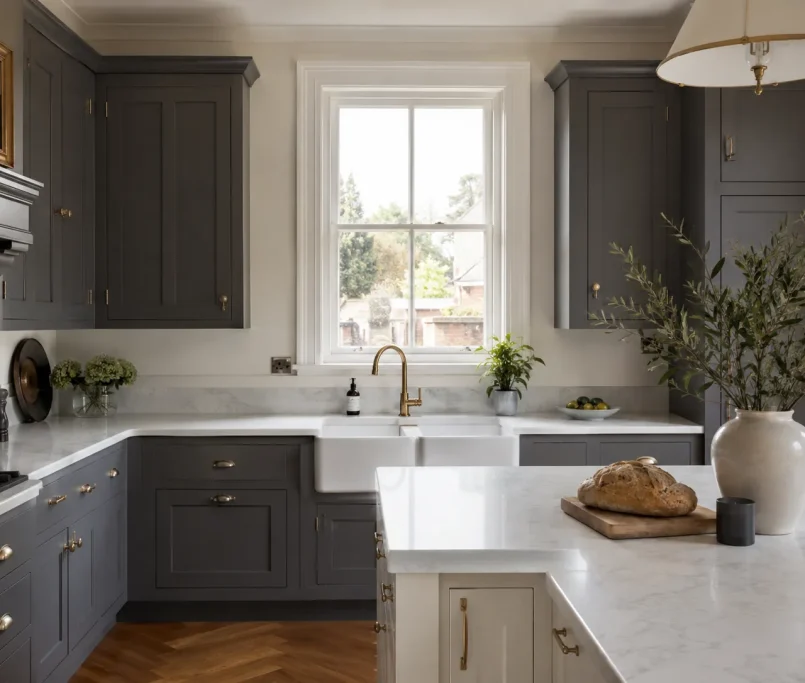
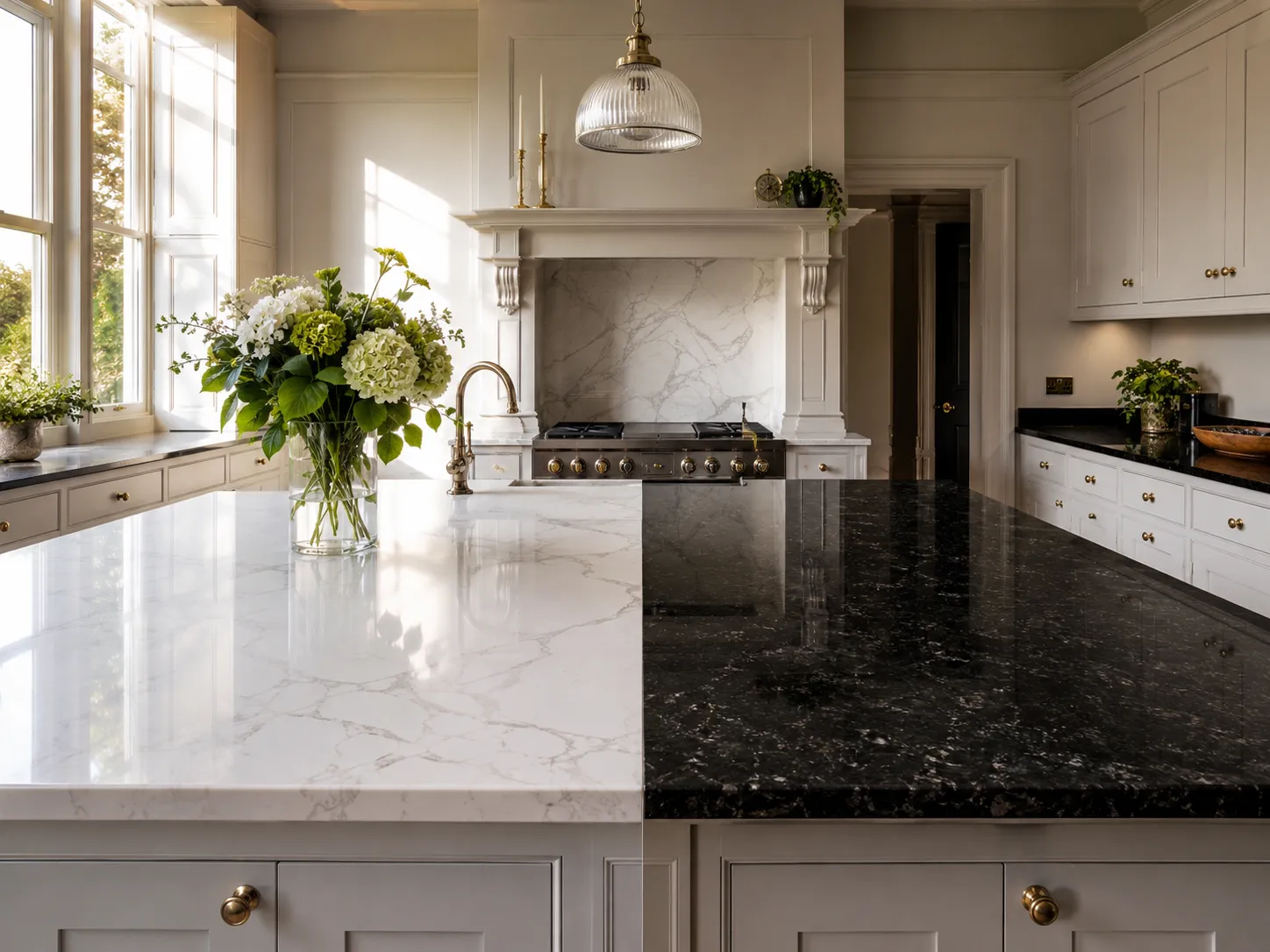
When choosing between quartz vs granite worktops, quartz is generally better for low-maintenance modern properties, whilst granite suits traditional aesthetics.
-
-
Composition: Quartz is engineered using 90-93% crushed stone bound with resins, whereas granite is 100% natural volcanic stone.
-
Porosity: Quartz surfaces are completely non-porous and stain-resistant; granite is naturally porous and requires annual sealing.
-
Durability: Both withstand heavy impact well, but quartz resists chipping better due to its flexible polymer binders.
-
Heat Resistance: Granite possesses superior direct heat thresholds, whereas engineered quartz resins can scorch above 150°C.
-
Technical Feasibility of Quartz vs Granite Worktops
When debating quartz vs granite worktops, the structural integrity and weight implications of the materials dictate your initial planning parameters. Both solid stone surfaces exert immense downward pressure on your underlying kitchen cabinetry carcasses, averaging roughly 50kg to 75kg per square metre.
During my ten years managing complex site installations, I have seen numerous multi-tier residential island projects require specialised reinforcement. At Tiny Houses inside, we analyse the density of your storage units before recommending specific stone profiles.
Selecting the right material involves assessing whether your kitchen frames can support natural solid slabs cleanly over time. Standard timber units handle both brilliantly, but low-cost flat-pack options often buckle under heavy, unreinforced natural granite pieces.
Navigating Material Durability in Modern Kitchen Renovations
Choosing the right stone surface can completely transform the overall longevity and performance of your upscale kitchen renovations project. When evaluating granite vs quartz worktops, the primary difference lies in how well each surface handles intense, everyday kitchen activity.
Engineered quartz offers exceptional structural durability because its internal polymer resins cushion the material against accidental impact cracks. This unique composition makes it a highly resilient addition to bustling family kitchens where heavy iron cookware is constantly handled.
Natural granite possesses incredible hardness but lacks the flexible structural elasticity found inside engineered stone slabs. This means that dropping a heavy cast-iron pan onto an exposed granite edge can cause small pieces of stone to chip off cleanly.
Maintenance Realities: Quartz vs Granite Worktops’ Stain Resistance
The everyday upkeep routines required for quartz vs granite worktops represent a massive point of divergence for busy UK homeowners. Engineered stone variants are manufactured to be completely non-porous, meaning they require zero specialised liquid sealants throughout their lifespan.
This non-porous surface blocks acidic liquids like red wine, lemon juice, or strong black tea from seeping into the slab. You can cleanly wipe away stubborn residues using simple warm water, mild soap, and a soft microfibre cloth.
Natural stone requires a more rigorous maintenance schedule to prevent deep discolouration across its beautiful organic surface. Because raw granite is naturally porous, you must apply a premium protective stone sealer at least once every twelve months.
Assessing Heat Resistance Barriers Across Both Materials
Understanding the thermal limitations of quartz vs granite worktops is essential for protecting your property from expensive structural damage. Natural granite is formed under intense volcanic heat, making it practically immune to damage from blistering hot pans placed directly onto it.
You can safely lift a hot roasting tin straight from the oven and set it onto a granite surface without causing any structural fractures. This superb thermal resilience makes natural stone highly desirable for passionate cooks who require a flexible, high-performance workspace.
Engineered quartz contains artificial binding resins that can scorch permanently if exposed to temperatures greater than 150°C. Placing a boiling pan directly onto a quartz surface will yellow the resin binders, leaving an unsightly, unrepairable burn ring behind.
Addressing Customer Mistakes During Kitchen Refurbishments
One of the most frequent errors I encounter on site is homeowners neglecting to check for subsurface flaws before installation. When managing premium Home Renovation Services, checking your raw stone slabs for micro-fissures is a mandatory step before cutting out sink spaces.
Natural granite can contain hidden internal cracks that can split completely open during the high-speed diamond cutting process. Our expert fabrication teams inspect every natural piece to ensure your worktops arrive on site completely free of flaws.
Another common pitfall is using aggressive chemical cleaners like bleach or oven sprays on engineered quartz slabs. These harsh alkalis attack the underlying polymers, permanently dulling the stone’s polished factory sheen and reducing its visual appeal.
Structural Compliance and National Regulations via Gov.uk
Every major structural alteration involving heavy stone worktops must satisfy current national building codes to maintain legal compliance. If your layout requires modifying primary drainage pathways or gas pipelines, you must secure certified trade sign-offs before work begins.
Consulting the statutory guidelines published on gov.uk protects your domestic investment from facing severe local council enforcement actions later. Our project managers oversee every stage, ensuring your electrical sockets and ventilation units strictly satisfy current safety protocols.
Securing these official compliance documents is absolutely critical for safeguarding your residential property’s long-term market value. We handle all necessary building control notifications, giving you complete peace of mind throughout your property overhaul.
Detailed Price and Lifespan Material Comparison
Understanding the financial commitments involved in stone procurement requires a transparent breakdown of material performance metrics. The table below presents real-world data compiled directly from our active residential project sites this year.
| Worktop Classification | Maintenance Needs | Average Lifespan | Relative Material Cost |
| Premium Engineered Quartz | Zero Sealing Required | 30+ Years | Premium (££) |
| Natural Sourced Granite | Annual Sealing Mandatory | 50+ Years | Premium (£££) |
| Standard Laminate Board | Low Upkeep (Prone to rot) | 5 – 10 Years | Budget (£) |
Why Our Direct Stone Supply Chain Costs 50% Less
Paying inflated high street showroom markups to independent design boutiques is an unnecessary waste of your property capital. We eliminate these excessive third-party margins entirely by keeping a massive trade inventory inside our dedicated local UK warehouse.
This infrastructure allows us to supply solid quartz slabs, natural timbers, and custom finishes at direct trade-wholesale rates. We pass these substantial procurement savings straight to your project balance sheet, making luxury finishes highly accessible.
Our direct-to-consumer delivery infrastructure cuts out the middleman, offering you exceptional British construction standards without the premium price tag. We manage your entire project pipeline smoothly, from the initial digital layout to the final site sign-off.
Secure Your Design Consultation and Fixed Price Estimate Today
Stop guessing about quartz vs granite worktop variables and let our technical specialists engineer your perfect kitchen layout. We provide fully itemised estimates, ensuring your beautiful new culinary space is delivered without any stressful financial surprises mid-build.
Take full advantage of our direct trade supply chain and secure your professional installation date before our seasonal schedule fills. Simply click Request an Appointment right now to access our online pricing tools and start your transformation.
FAQs
Can you cut food directly on quartz vs granite worktop surfaces? While quartz is highly scratch-resistant, cutting directly on its surface can eventually dull your kitchen knives and scratch the resin polish. We always advise using dedicated chopping boards to protect your stone surfaces from unnecessary wear.
How do I test if my natural granite worktop requires a new coat of sealer? Place a few droplets of water directly onto the granite surface and wait roughly ten to fifteen minutes. If the water beads up cleanly, your sealer remains fully intact; if it sinks in and darkens the stone, you must reseal.
Are seams visible when installing quartz vs granite worktop slabs? Yes, any stone layout requiring multiple joint sections will have visible seams where the two pieces meet on site. However, our experienced installation teams utilise advanced colour-matched epoxy resins to make these joins look remarkably flat, tight, and inconspicuous.