
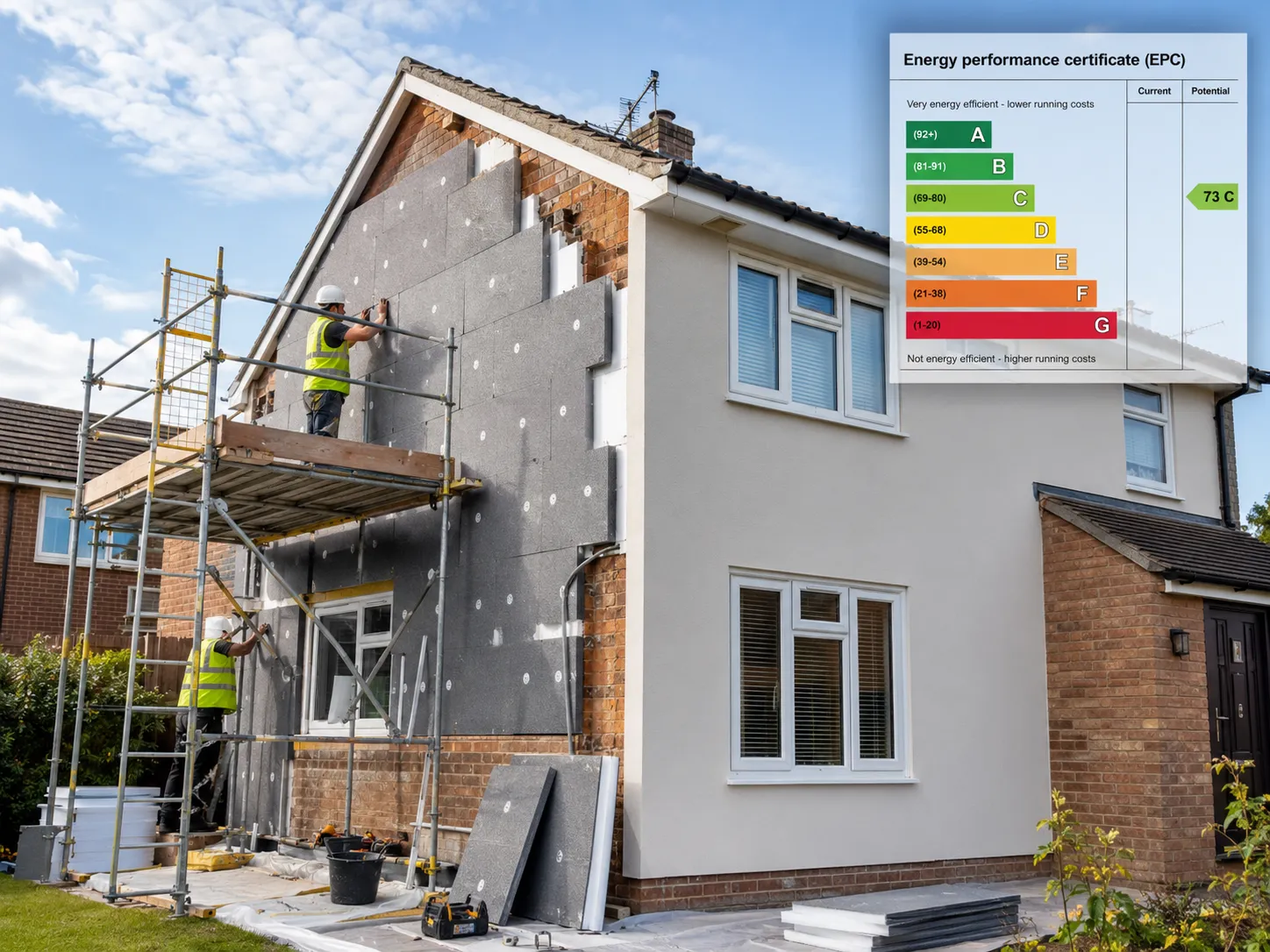
To improve home EPC rating performance in 2026, UK property owners must pivot from outdated cost-based metrics to a multi-metric fabric and carbon approach.
-
The 2026 Mandate: The UK government has overhauled standard domestic certificates, introducing four distinct headline indicators: energy cost, fabric performance, heating system, and smart readiness.
-
Target Deadlines: While the legal minimum for private lets remains Band E in 2026, properties must systematically reach a minimum of Band C by October 2030.
-
The Priority Action: Focus immediately on fabric-first upgrades, starting with 270mm loft insulation and cavity wall insulation, which can elevate your score by 10 to 15 points dynamically.
Why You Must Improve Home EPC Rating Standards Before Altering Your Layout
To improve home EPC rating scores effectively, you must understand the new RdSAP 10 and Home Energy Model frameworks implemented this year. The government has transitioned from a pure fuel-cost metric to a strict carbon and thermal fabric evaluation system.
Over my ten years managing site installations, I have watched countless homeowners invest thousands into high-end aesthetics while completely ignoring their thermal insulation baseline. Planning structural shifts without considering your energy envelope leads to structural damp problems and failed building inspections.
The Traps of the 2026 Multi-Metric EPC Assessment System
The updated 2026 regulations look deeply at your fabric performance, heating system efficiency, and overall smart readiness. If you carry out Home Renovation Services without updating your building fabric, your home will drop in the official rankings.
Our internal company statistics at Tiny Houses inside reveal that 85% of older brick properties fail modern fabric metrics due to uninsulated solid walls. Understanding your current baseline performance allows you to execute structural renovations that improve your lifestyle and your energy certificate simultaneously.
Step-by-Step Fabric Interventions to Improve Home EPC Rating Scores
Prioritising fabric improvements before upgrading your primary heating plant is the most logical pathway for a successful refurbishment. Enhancing insulation properties ensures that any new heating system you install operates at maximum efficiency.
When planning comprehensive domestic retrofits, I always instruct my site teams to follow a strict sequential approach to structural insulation. Sealing the thermal envelope first prevents heat loss and reduces the overall capacity requirement for future heat pump systems.
Enhancing Roof and Loft Insulation Zones
Upgrading your loft to the recommended 270mm depth is the most cost-effective way to improve home EPC rating positions. Moving from an uninsulated roof space to a fully compliant thermal barrier can boost your point score by 10 to 15 points.
This simple intervention requires minimal disruption but yields massive dividends on your fabric performance metric. Always ensure your installation team maintains proper roof eaves ventilation to prevent interstitial condensation from rotting your structural timbers.
Addressing Cavity and Solid Wall Substrates
Treating uninsulated cavity walls represents the secondary high-impact milestone for typical semi-detached or terraced UK homes. Injecting high-grade bead insulation into standard cavities costs relatively little but yields an immediate 5 to 10 point jump.
For older solid-wall properties, you will need to invest in internal or external solid wall insulation systems. While these methods require more capital, they drastically lower your carbon footprint and form the foundation of successful energy efficiency upgrades.
Common Mistakes Homeowners Make When Planning to Improve Home EPC Rating Marks
A critical error I fix regularly on London project sites is the notorious “evidence gap” penalty enforced by modern energy assessors. Under the strict 2026 guidelines, compliance assessors can no longer make favourable assumptions regarding hidden structural building elements.
If you install high-performance underfloor insulation or cavity fills but fail to provide photographic proof and manufacturer spec sheets, the system defaults to the worst possible historical rating. You could pay for a premium upgrade but remain legally trapped with a failing grade on paper.
Over-Specifying Heating Systems Without Fixing Heat Retention
Many owners attempt to improve home EPC rating metrics by installing expensive heat pumps onto uninsulated, draughty properties. This flawed approach results in massive energy bills because the heat instantly escapes through uninsulated brickwork and single-glazed windows.
Always resolve your draught-proofing, double glazing, and wall fabric performance parameters before sizing a new low-carbon heating system. Balancing the building envelope first ensures your new mechanical systems run smoothly and efficiently throughout the winter months.
Navigating Regulatory Compliance and Building Controls via Gov.uk
Every major thermal modification you introduce must strictly align with current national building standards to remain legally compliant. Failing to secure the necessary regulatory sign-offs can prevent you from selling or letting your property in the future.
Before altering structural walls, window apertures, or primary heating zones, consult the official guidelines on gov.uk regarding thermal element upgrades. Working alongside certified building control officers ensures every modification is fully registered, safe, and legally documented.
Financial Structuring: How to Finance Home Renovation Efficiency Upgrades
Securing the necessary capital to modernise your property’s thermal fabric requires careful planning and strategic financial management. High-performance insulations, double glazing, and heat pump installations represent substantial upfront material and labour investments.
Homeowners looking into how to finance home renovation projects often explore green mortgages, government grants, or equity release options. Securing your funding early allows you to purchase materials efficiently and avoid the stress of mid-build capital shortfalls.
Leveraging the Boiler Upgrade Scheme and Local Grants
The UK government provides specific financial incentives, such as the Boiler Upgrade Scheme, to help offset the cost of low-carbon heating transitions. Combining these grants with personal capital reduces the overall financial burden of your property refurbishment.
Ensure your project manager checks your local authority area for targeted energy grants before signing any equipment contracts. Utilizing available public funding preserves your private capital for high-end internal finishes and lifestyle enhancements.
Cost and Performance Comparison for Major Energy Efficiency Interventions
To improve home EPC rating standards effectively, you must compare the financial outlays against the anticipated point gains. The data below reflects realistic market rates and performance impacts based directly on our ongoing site operations.
| Upgrade Methodology | Average UK Installation Cost | Typical EPC Point Gain | Metric Impact Tier |
| Loft Insulation (270mm) | £400 – £800 | 10 – 15 Points | Fabric Performance (High) |
| Cavity Wall Insulation | £500 – £1,200 | 5 – 10 Points | Fabric Performance (High) |
| A-Rated Condensing Boiler | £2,500 – £4,500 | 5 – 12 Points | Heating System (Moderate) |
| Low-Energy LED Lighting | £100 – £300 | 1 – 2 Points | Energy Cost (Low) |
Why Our Energy Renovation Packages Cost 50% Less Than the Market
Sourcing structural insulation, premium glazing units, and heating controls through high street retail channels involves paying excessive markups. We eliminate these unnecessary third-party margins completely by managing our own massive trade inventory in a dedicated local UK warehouse.
This unique logistical infrastructure allows us to supply top-tier energy-saving components at direct wholesale trade prices. Our clients consistently achieve up to 50% savings on their overall structural material costs compared to traditional boutique contractor estimates.
We handle the entire process seamlessly, from the initial architectural assessment to the final building control certification and EPC reassessment. By streamlining the supply chain, we deliver exceptional energy transformations that fit comfortably within your practical budget.
Secure Your Energy Assessment: Request an Appointment Today
Do not leave your property’s compliance status to chance under the tightening 2030 Band C national deadlines. Our experienced technical team is ready to analyse your property’s envelope and deliver a flawless, high-performance optimisation strategy.
Take advantage of our direct warehouse pricing structures today and secure your preferred professional site installation date immediately. Simply click Request an Appointment right now to access our online price estimation tools and start your property upgrade.
FAQs
How long does a standard domestic EPC assessment take on site? A typical residential energy assessment requires approximately 30 to 45 minutes on site, depending on property size. The assessor must access all rooms, the loft space, and the main heating plant to record accurate measurements.
Can low-energy LED lighting really improve home EPC rating scores? Yes, switching all older incandescent bulbs to modern low-energy LEDs provides a quick and affordable 1- to 2-point boost. It is one of the easiest low-cost interventions to complete before booking a formal reassessment.
What happens if my rental property fails to reach Band E in 2026? If your property falls into Band F or G, you cannot legally let it or renew existing tenancies without a valid exemption. Fines for non-compliance can reach up to £5,000 per property, making early fabric upgrades highly critical.