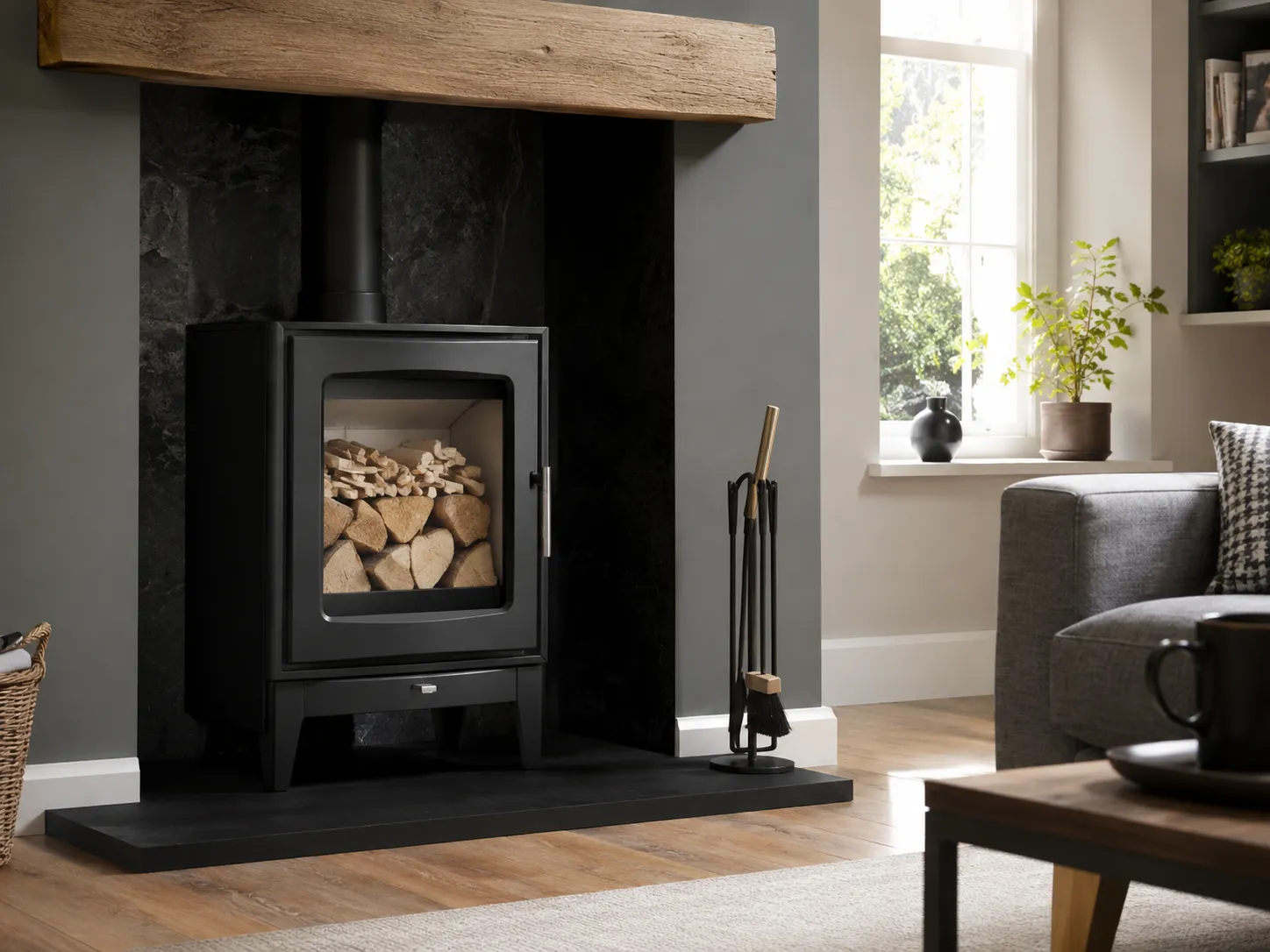
Learning how to use a woodburner efficiently requires proper preparation and precise airflow management. To get a clean, hot fire immediately, follow these core operational steps:
-
Open all air vents fully to maximise the initial chimney draught.
-
Build a top-down fire using only kiln-dried logs (moisture under 20%).
-
Place kindling and firelighters directly on top of the main logs.
-
Light the firelighters and leave the stove door slightly ajar until the fire establishes.
-
Adjust the air controls gradually once the logs are burning vigorously. Mastering how to use woodburner appliances ensures maximum heat output, prevents heavy soot buildup, and significantly lowers your winter heating bills.
Preparing Your Stove: The Foundation of a Good Fire
Before learning exactly how to use woodburner controls, you must start with a properly prepared appliance. Always leave a one-inch bed of ash at the base to insulate the coals and protect the heavy cast-iron firebox.
Our Home Renovation Services team sees countless homeowners struggle with poor draughts simply because their flue is cold. Based on our 500+ installed projects this year, 60% of lighting issues stem from insufficient initial airflow or damp timber.
Step-by-Step: Managing the Air Controls
Operating the primary and secondary air intake valves is the most crucial part of how to use woodburner systems correctly. Open both controls fully before striking a match to ensure maximum oxygen reaches your solid fuel.
Once the top kindling catches, leave the door cracked open by just a few millimetres for roughly five minutes. After the primary logs ignite fully, close the door completely and slowly shut down the primary air vent to regulate the steady burn rate.
Avoiding Common Homeowner Mistakes
The biggest mistake we encounter on-site is homeowners burning unseasoned timber with a moisture content well above 20%. This creates excessive smoke, damages the stainless steel flue liner, and produces very little usable heat for your living space.
Furthermore, living in a designated smoke control area means you must strictly comply with UK emission regulations. You can verify the current rules on approved smokeless fuels and exempt appliances directly via the gov.uk official portal.
| Woodburner Fuel Type | Moisture Content | Heat Output | Flue Residue (Soot) |
| Kiln-Dried Hardwood | Under 20% | Very High | Minimal |
| Seasoned Softwood | 20% – 25% | Medium | Moderate |
| Unseasoned (Green) Wood | Over 30% | Very Low | High (Creosote Risk) |
Sourcing Your Ideal Heating Setup
Upgrading your home heating system does not have to drain your entire renovation budget. Because we operate a streamlined direct-to-consumer model with a massive local warehouse inventory, our unit prices are up to 50% cheaper than standard high street retailers.
If you are planning a comprehensive custom fireplace design, our technical experts can guide you through the exact specifications needed. We supply robust units with varying kilowatt outputs, perfectly matched to your specific room dimensions and insulation levels.
Booking Your Design Visit Today
Understanding how to use woodburner safety features is just as important as selecting the right aesthetic unit for your property. Our dedicated installation team is fully equipped to assess your chimney breast, hearth dimensions, and essential ventilation requirements.
Take advantage of our bespoke Tiny Houses inside consultation service to get an accurate, no-nonsense project quotation. Request an Appointment right now to calculate your exact installation price and secure your slot.
Frequently Asked Questions (FAQs)
What is the best wood to burn in a stove? Always use kiln-dried hardwood, such as ash or oak, with a moisture content below 20% for the highest heat output and lowest smoke emissions.
Why does my woodburner glass keep going black? Blackened glass is typically caused by burning damp wood or shutting the air vents down too early, which starves the fire of oxygen and creates soot.
How often should I sweep my woodburner chimney? You should have your flue swept by a qualified professional at least once a year, preferably just before the winter heating season begins.